How to Read an Italian Alley: 7 Architectural Clues That Reveal a Neighborhood's History
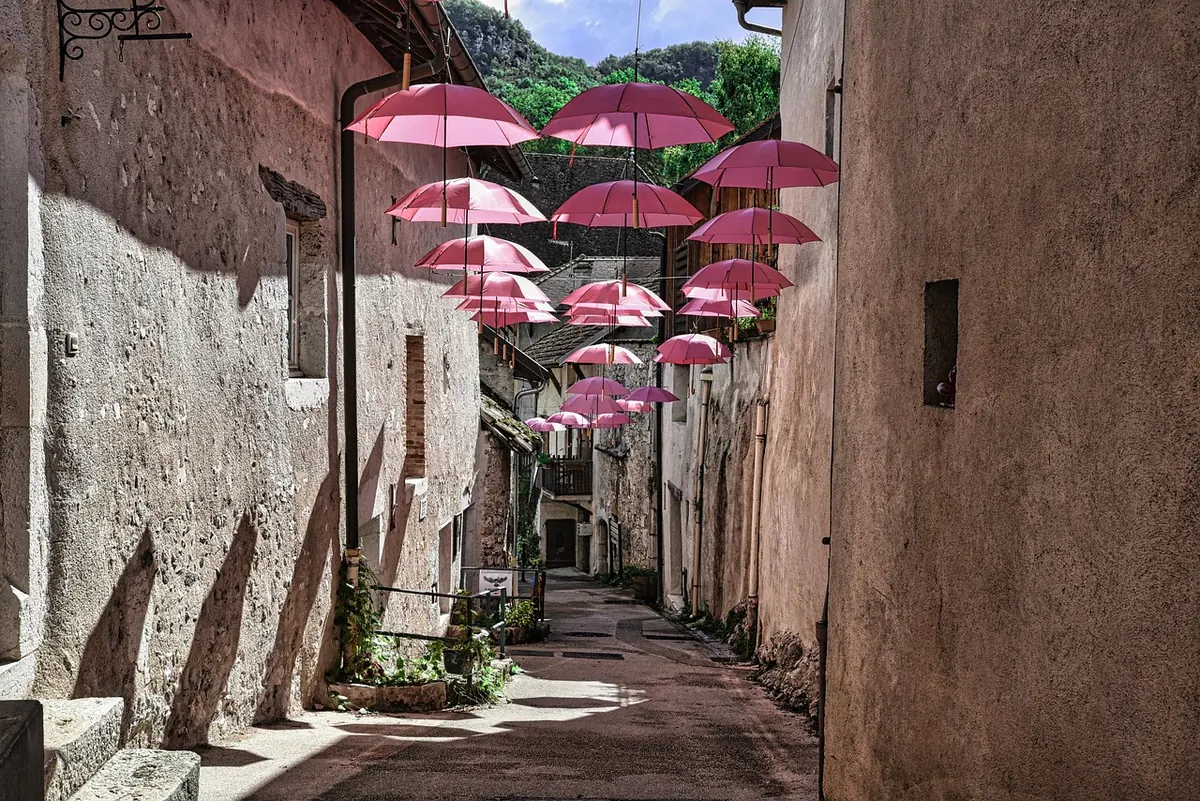
Italian alleys are often treated as scenery: a strip of shade, a line of laundry, a place to pass through on the way to somewhere else. But an alley is also a document. Its doorways, stones, arches, and patched paving record how a neighborhood was built, repaired, divided, and lived in. You do not need an architectural degree to read it. You need a slow pace, a sharp eye, and a few questions to ask of the wall in front of you.
Doorways: The First Sentence of the Street
Start at eye level, then look down. A doorway tells you more about a building’s use than almost any other detail. A narrow rectangular opening with a single stone lintel often belongs to a modest house. A broad opening with a deep recess and a worn central step may have been a workshop or shop, built to let in light, goods, and conversation. An arched doorway can be older, but not always; arches were also added later to strengthen a wall above a widened opening.
Look at how the door sits in the wall. A threshold stone that stands proud of the paving suggests the street level has risen around it. A doorstep that has been replaced with smooth modern stone while the jambs remain old tells you someone adjusted the entrance for easier access, a new floor, or a change in use. And look at the wear: a shallow dip in the center of a stone threshold is the signature of decades of feet. A sharp, clean edge usually means replacement.
The frame matters too. If the stone surround is a different color or texture from the wall, the opening may have been cut later. If the lintel has empty hinge holes or a faded rectangular patch above it, there may once have been a sign, a shutter, or a second door. Doorways are rarely just doorways; they are the places where a building meets the street, and where change is easiest to make.
Stone, Mortar, and the Local Accent
Walls are a conversation between what was nearby and what could be afforded. In parts of Lazio, you will see soft volcanic tuff, warm and porous, easy to cut and prone to pitting. In Puglia, pale limestone can look almost edible in the sun. In Naples and parts of Sicily, darker basalt and other volcanic stones give alleys a heavier, sootier tone. None of this is decorative theory. It tells you what builders could quarry, cart, or salvage.
Read the mortar, not just the stone
Mortar is one of the most honest clues on any wall. Old lime mortar is usually soft, pale, and slightly irregular; it moves with the building and lets moisture escape. Hard grey cement repointing is visually loud and often belongs to a twentieth-century repair. A wall repointed in cement is not ruined history, but it is a different chapter. Look for patches where the mortar color changes in a neat rectangle or along a crack. That is often a repair, a filled joint, or a place where a pipe was chased into the wall.
Corners are useful, too. Builders often used larger, squarer stones at the edges of a building, and plaster falls away there first. If the corner stones are a different material from the wall, you may be looking at a later addition or a rebuilt section. At the base of the wall, a band of darker or harder stone can be a simple defense against damp and splashing. Practical problems leave visible answers.
Arches and the Honest Scars of Repair
An arch is both a structural solution and a date stamp. A semicircular arch has a different rhythm from a shallow segmental arch, and a flat stone lintel belongs to another way of spanning an opening. When you see a brick arch set into a stone wall, or a stone ring set into brick, ask why. The answer is often repair: an opening was rebuilt, widened, or strengthened with whatever material was at hand.
Filled-in arches are especially revealing. A ghost outline in the plaster, a change in masonry inside an arch, or a doorway shape that stops halfway up the wall can mark an opening that was closed. Sometimes the infill is brick, sometimes rough stone, sometimes a patch of plaster over rubble. None of these is a flaw in the story. A repaired arch is often the story.
A wall that has been mended badly, patiently, or cheaply is still telling you who had the money, the skill, and the need to keep the building standing.
Look also for iron ties, buttresses, and oversized keystones. A keystone that is a different color from its neighbors may have been replaced after a crack. A buttress added against one wall suggests movement or a heavier load above. These are not details for engineers alone; they are visible decisions that shaped the alley you are walking through.
Windows, Ironwork, and the Rules of the Street
Windows show how a neighborhood balanced light, privacy, and security. Ground-floor openings are often smaller and fitted with grilles, especially where the street was busy or the house faced a public passage. Upper floors may have larger windows, shutters, and small balconies. If a ground-floor window has been enlarged but the grille fixings remain, you can see the old caution in the stone.
Ironwork is a useful comparison tool. A balcony added later often sits on brackets that are not fully bonded into the wall, or its ironwork is thinner and more uniform than the older railings nearby. Mismatched shutters on one facade may mean separate apartments, later replacements, or a building that was divided. External stairs are another clue: they often mark separate access, a later entrance, or a way of keeping the ground floor for storage or animals.
Do not ignore the small stuff. A lamp bracket, a doorbell plate, a faded number painted on plaster, or a pipe running across a facade all show how the building was adapted. The oldest structure is not always the most visible one. Sometimes it survives in the shape of an opening, not in the surface you first notice.
The Ground Beneath Your Feet
Look down. Paving is a timeline you can walk on. Large flagstones, rounded cobbles, dark basalt slabs, and smooth concrete patches often meet in the same alley. A central channel or a line of lower stones may be an old drain. A raised strip along one side can mark a narrow pedestrian edge. Steps that dip in the middle have been worn by generations of feet; steps with sharp edges have been rebuilt.
Changes in paving often follow property lines. If the stone changes exactly at a doorway, that is a threshold. If a smooth ramp cuts across older cobbles, someone made access easier. If a utility cover sits in a rectangle of newer concrete, you are looking at a modern intervention, not ancient paving. None of this requires a guidebook. It requires you to notice where one surface gives way to another.
How to Read a Facade in Five Minutes
Stand at one end of the alley and give yourself a short, deliberate method. Do not begin with the most photogenic window. Begin with the whole wall, then move inward.
- Scan the rhythm. Look at the roofline, the doorways, and the windows as a pattern. Where does the pattern break? A missing window or an extra door is a clue.
- Hunt for ghost openings. Look for plaster scars, filled arches, stone outlines, or patches where a doorway or window has been closed.
- Compare materials at corners and openings. Different stone around a door or at a building edge often means a later change.
- Check the ground line. Thresholds, steps, drains, and paving patches show how the street has been raised, repaired, or divided.
- Ask what is newest. Cables, cement, new shutters, and neat utility boxes are recent layers. Notice them, then look past them to the older shapes underneath.
No single clue proves a date or a story. A filled arch might be a former shop, a blocked window, or a structural repair. A different stone might be a cheap fix or a deliberate design. Read clues in groups, and stay comfortable with uncertainty. The alley does not owe you a neat label.
A Short Field Method Before You Move On
Walk the same alley twice: once for the overall impression, once for details. Take one wide photograph and one close-up of a doorway, an arch, or a patch of paving. Daylight is better than flash for showing stone color and mortar lines. Carry a small notebook or use your phone to note what you see, because details blur quickly from one street to the next.
Choose one clue per alley and follow it. Today, doorways. Tomorrow, mortar. The day after, the ground. You will learn more from one repeated detail than from a dozen hurried stops. And remember that these are living streets, not open-air museums. Keep your voice low, do not block doorways, ask before photographing people, and do not enter private courtyards or touch unstable walls. If a door is open, admire from the threshold and move on.
The reward is simple: an alley stops being a backdrop and becomes a place with a past you can partly read for yourself. You will start noticing the raised threshold, the brick arch in the stone wall, the repaired corner, the paving that changes at a hidden property line. That is how a neighborhood begins to speak.
Photo: lecreusois / Pixabay