Local Stories Behind 6 Everyday Alley Details: Laundry Lines, Doorbells, Shrines, and More
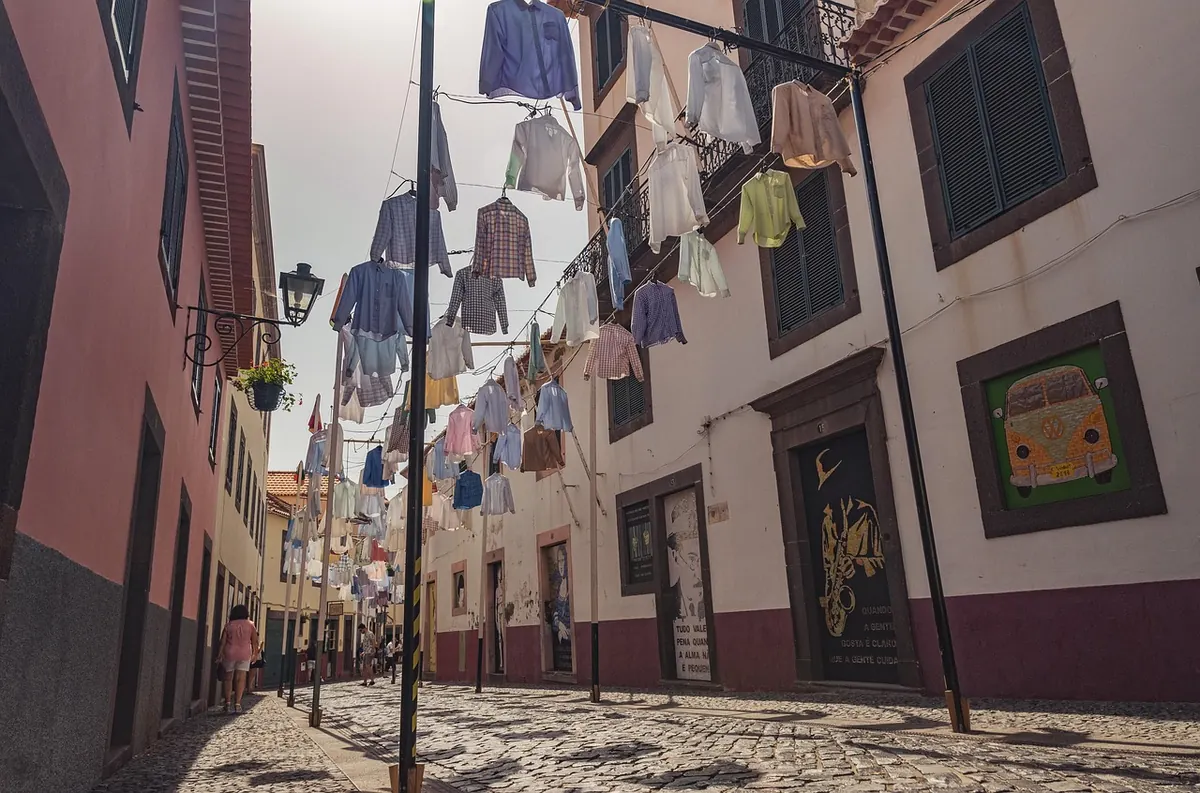
Walk through any Italian alley at seven in the morning and you will see things no guidebook bothers with. A line of sheets snapping between two buildings. A nameplate worn smooth by thumbs. A plastic chair set out on the cobbles, facing nothing in particular. These are not decorations. They are the working parts of a neighbourhood, and they tell you more about the people behind the shutters than any monument at the end of the street.
What follows is a way of reading them. Not a list of curiosities, but a set of habits you can notice on your next walk — and a few things to keep in mind so that noticing does not turn into intruding.
The laundry line is a timetable
In the historic centre of almost any Italian town, the washing hangs where the sun is, which usually means over the street. Look at what is out and you can read the household. Baby clothes on a Tuesday morning: someone is home all day. Work shirts and dark trousers, hung carefully by the cuffs: someone leaves early. Nothing at all for three days, then a sudden avalanche of towels: someone has been away, or ill, or has finally had a dry afternoon.
The line is also a small act of trust. You are hanging your underwear above a public passage, fifteen feet from a stranger's window, and the assumption is that nobody will comment, photograph or touch. In return, the street gets colour, movement and a certain smell of soap. Hanging laundry is not permitted everywhere — some historic centres have rules about visible lines on principal façades, and condominium agreements vary — but where it happens, it happens with a confidence that is worth respecting. If you want a photograph, ask. A gesture toward the line and a questioning look usually gets an answer, and a shrug is an answer too.
The doorbell is the front door of privacy
Italian doorways are guarded by a small brass panel of names, and that panel is a census. One surname repeated four times with different initials: an extended family in a building that has been theirs for decades. A single surname with a professional title beside it: a studio, probably on the ground floor, probably with the door open in summer. Five unrelated names squeezed in, one of them written in different handwriting on a strip of tape: the newest tenant, added later, still provisional.
Then there is the citofono, the intercom. Its sound is part of the alley's rhythm — the buzz, the crackle, the half-shouted "chi è?" before anyone agrees to press the button that opens the street door. Watch how people use it. Locals announce themselves by name, briefly, and are admitted. Strangers get questioned. Deliveries get a negotiation. The intercom is where the alley's openness stops, and it is a good reminder that friendliness on the street does not mean the private door is open.
Practical note: if you are renting and the plate still says the previous tenant's name, nobody will think it strange if you leave it. Many do. But if you are the one expecting guests, tell them the surname on the bell, not the number of the flat.
The small shrine is a record of who lived here
Look up, at the corner where two walls meet, or just above a doorway at eye level. A niche, sometimes glass-fronted, sometimes no more than a shelf: a Madonna, a saint, plastic flowers gone pale, a small red lamp that someone still changes. These edicole votive are everywhere in some towns and rare in others, and their condition is the interesting part. A clean shrine with fresh flowers means a living devotion, usually maintained by one person on the street. A dusty one with a cracked frame means the family who cared for it moved away.
On walls nearby you will sometimes find a small marble plaque with a name, two dates and a photograph — a memorial to someone killed there, often in an accident or in wartime. Do not treat these as tourist props. They are visited. People stop, stand a moment, and go on.
There is no reliable rule about which shrines you may photograph, so use the ordinary one: if it is at eye level and clearly maintained, ask first. If it is high on a wall and nobody is around, a discreet picture is usually fine. Never move anything, and never leave a coin or a trinket behind as a gesture. It is not your shelf.
The chair outside the door marks a border
A folding chair, a plastic kitchen chair, an old stool with the seat repaired by a cushion. Set out in the late afternoon, it converts a strip of public pavement into a temporary front room. The person sitting on it may be shelling peas, watching a grandchild, or doing nothing at all, and doing nothing is the point. The chair says: this doorway is mine, and I am available for conversation without being obliged to start it.
Notice the geometry. Chairs tend to face outward, toward the street, not inward toward each other — unless there are three or four of them, in which case a card game or a conversation is under way and the group will be occupying a corner. Everyone on the street walks around them without being asked. That is the whole system: the claim is made by a chair, and the claim is granted by everybody else.
If you are walking past and someone nods, nod back. If you are invited to sit, understand it as a genuine offer and sit for a few minutes. Bring nothing, expect nothing, and do not outstay the conversation.
Handwritten signs do the work of a concierge
Cardboard and a felt-tip pen can hold an entire neighbourhood's operating instructions. The signs are rarely official, often taped at chest height to a shutter or a pipe, and they tell you exactly what the alley expects of you:
- "Non parcheggiare — passo carrabile" — do not park here, this is a driveway. Often with a phone number added, or the words "rimozione forzata" to raise the stakes.
- "Torno subito" — back soon. Written on a shop door at eleven in the morning, and trustworthy in a way that a printed sign would not be.
- "Chiuso per lutto" — closed for mourning. Short, entirely final, and nobody asks when it will reopen.
- "Acqua non potabile" — not drinking water. Worth reading twice in summer.
- "Non dare da mangiare ai gatti" — do not feed the cats. Which brings us to the last detail.
Pay attention to the pen. A sign written in careful capitals on a piece of plywood and nailed up properly belongs to a shop that has been there thirty years. A note on the back of an envelope, taped at an angle, belongs to someone improvising this morning. Both are the same thing: an alley that regulates itself without a committee.
The water bowl is a shared responsibility
Outside a doorway, in the shade, a shallow plastic bowl or an old terracotta pot with water in it. Somewhere nearby, a cat asleep on a step as though it owns the place, which it probably does. Italy has a long, unglamorous tradition of neighbourhood cats, and in many towns a colony is fed on a rota that nobody has ever written down.
The bowl is one of the friendliest details in the alley because it is maintained anonymously. Someone fills it, someone else rinses it, and the person who does neither still knows not to kick it. If you see a bowl that has been dry for days, leave it alone — the arrangement may have changed and it is not yours to fix. If you are staying in a rented flat for a week, resist the urge to adopt the cats. Feeding a colony irregularly can unsettle a routine that took years to build.
How to read an alley without being a nuisance
These details reward a slower walk. Go out early, before the shutters are fully up, and again around seven in the evening when the chairs appear. Look up more than you look down: laundry, shrines and nameplates all live above head height. Sit on a bench with a coffee for twenty minutes and simply watch who greets whom — in a small alley, the greetings map the social structure better than any guidebook.
Then apply the ordinary courtesies:
- Greet first. A quiet buongiorno to the person on the chair costs nothing and changes how the rest of your walk feels.
- Ask before photographing anything personal — laundry, doorbells with legible names, shrines someone clearly tends.
- Do not touch. Not the signs, not the flowers, not the bowls.
- Buy something if you are going to linger outside a shop. A coffee, a piece of fruit, a bottle of water.
- When in doubt, keep moving. An alley is a living room with a public right of way through it, and behaving accordingly is all the etiquette there is.
None of this is hidden. It is all in plain sight, at knee height and eyeliner height, waiting for someone to slow down and notice that a street is not just a route between two places but a set of agreements about how to live close together.