What Locals Mean When They Say 'Vicolo': A Short Explainer for Travelers
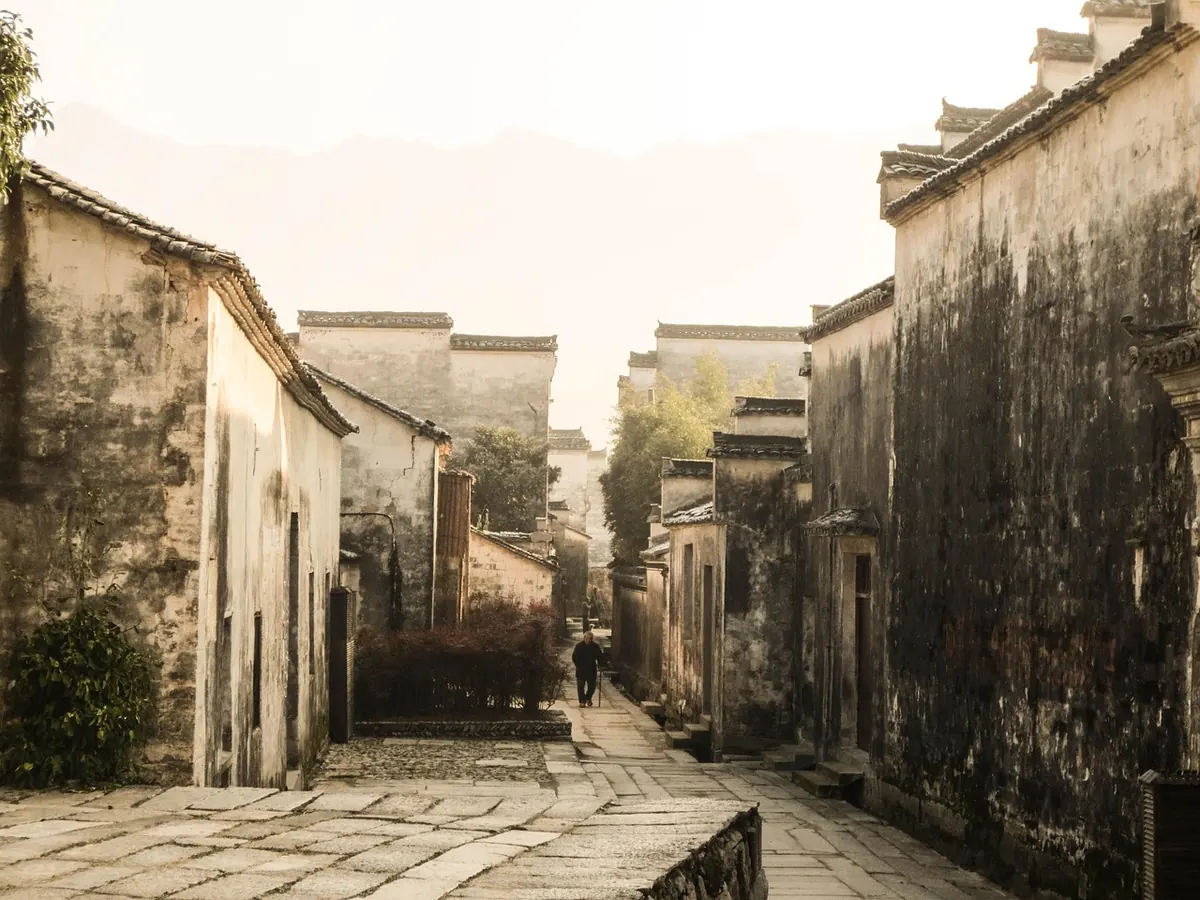
Ask for directions in an Italian hill town and the answer rarely begins with a street name. It begins with a gesture, a landmark, and one word: vicolo. "Take the second vicolo on the left, past the fountain, then keep climbing." You nod, walk twenty metres, and find yourself in a passage barely wide enough for two people and a cat. That is the moment the word stops being vocabulary and becomes something you can actually use.
The Word Itself: A Little Vicus
Vicolo comes from the Latin viculus, a diminutive of vicus. A vicus was not really a road; it was a cluster of houses, a quarter, the small human unit that grew up around a crossing, a well or a church. Shrink it with a diminutive and you get something close to "little quarter": the lane that runs inside the block rather than around it.
That origin explains the word's behaviour. A vicolo is subordinate by nature. It does not connect two towns, carry traffic or host a market. It slips between buildings, bends when the walls bend, and sometimes ends where it began. In most Italian towns it is the narrowest officially named street type, and the one most likely to be left off a map or reduced to a thin grey line that tells you nothing about what it feels like to walk.
A Short Ladder of Italian Street Words
Italian address vocabulary is a hierarchy, and the hierarchy is practical: it tells you width, importance and often slope before you set off. Roughly from grandest to smallest:
- Via — the default word for a street. If you hear via, picture something a car can use.
- Viale — a broad avenue, usually tree-lined, often on the edge of the historic centre where the old walls used to be.
- Corso — a main artery through town, historically associated with processions and races.
- Piazza, piazzale, piazzetta, largo — squares of descending size; largo is often just a widening where streets meet.
- Vicolo — a narrow lane. The subject of this piece.
- Vicolo cieco — a blind alley. Literally "blind vicolo", and a useful phrase to recognise before you commit to it with luggage.
- Traversa — a cross street, usually short, connecting two larger streets.
- Salita, discesa, scalinata — a climb, a descent, a flight of steps. In hill towns these are real addresses, not descriptions.
- Strada — a road, often outside the centre or leading out of it.
- Lungomare, riva, fondamenta — waterfront streets, from the sea to the canal bank.
Read a town through this ladder and the map becomes a rumour you can check. A route that runs via, corso, vicolo, vicolo, salita is telling you something: busy, then quiet, then steep.
Every Region Has Its Own Word
Vicolo is standard Italian, but locals often use something else entirely, and the sign on the wall may not match the phrase in your guidebook.
In Venice you will look in vain for vicoli. The city uses calle for a lane, ruga for a slightly wider one lined with shops, salizada for a paved lane, sotoportego for a passage under a building, and campiello for the small square it opens onto. Genoa keeps its dense medieval lanes as caruggi. In Sicily a narrow alley may be a vanedda; in parts of Lombardy you will meet a chiasso; in Naples, steep stepped lanes are gradoni, and the word is literal enough that you will feel it in your calves.
None of this is trivia. If a Venetian tells you to take the third calle, searching your map for a "vicolo" will waste ten minutes in the sun.
What a Name Tells You Before You Walk It
Italian lanes are frequently named after what used to happen in them. A walk through almost any historic centre turns up variants on Vicolo del Forno (the bakery), dei Fabbri (the smiths), dell'Arco, della Pace, del Gatto. Sometimes the trade is long gone and only the name survives; sometimes the name is the last record that a workshop stood there for two centuries.
You will also see numbered lanes: Vicolo I, Vicolo II, and so on, laid out in parallel behind a main street. These are typically modern additions from the nineteenth or twentieth century, when a town finally got around to registering lanes that had been nameless for generations. If the numbers run in sequence, you can guess the shape of the block before you enter it.
And watch the abbreviation. On maps and small ceramic plates, vicolo often appears as V.lo or simply V. A line reading "V. lo Stretto 4" is not a typo; it is a lane called Stretto, and it will probably live up to the name.
How to Use All This on the Ground
None of it matters if you cannot find the corner. A few habits make narrow-lane towns far less frustrating:
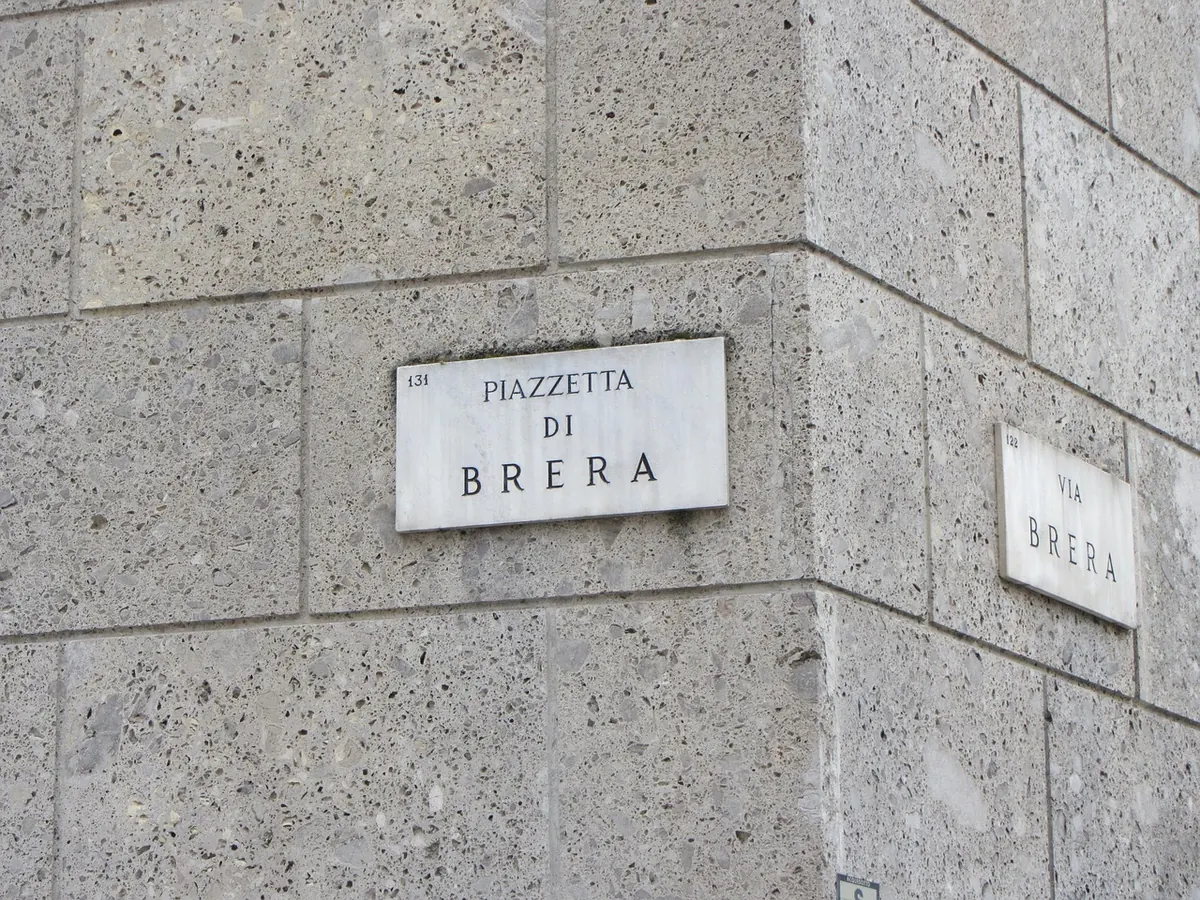
- Read the plates at the junction, not the door. Italian street names are usually fixed to the wall at the corner where the street begins, high up. Look back over your shoulder as you walk; that is where the sign for the lane you just left will be.
- Treat house numbers as a rough guide only. Numbers often run odd-and-even on opposite sides, sometimes restart at a piazza, and in Venice they run across an entire sestiere rather than a single street. In Venice, "Calle dei Fabbri 1234" tells a local almost nothing without the district.
- Assume less width than the map suggests. A line on a screen says nothing about steps, arches, laundry lines or a delivery van parked for the morning. If a route looks tight on paper, it will be tighter in person.
- Use landmarks, not names. When asking, say "the vicolo behind the church with the green door" rather than attempting the pronunciation of a fourteenth-century surname.
- Respect vicolo cieco. If the sign says it, believe it. Local cats will look at you with quiet satisfaction as you turn around.
A Short Field Guide for the Next Corner
When someone tells you to take a vicolo, they are giving you more than a direction. They are telling you the street is narrow, probably short, likely older than the main road it leaves, and almost certainly not designed for the car you are standing next to. Walk it slowly. Let someone pass. Look up at the shutters and the brackets that once held lanterns.
Three things worth doing: photograph the corner plate before you walk in, so you can find your way back out; note the name of the nearest piazza as your anchor; and if the lane forks, take the branch with the better light — that is usually the one that leads somewhere. The rest, as with most of Italy, is best learned by getting mildly lost and then asking again.
Photo: bigfoot / Pixabay